Every year someone announces the death of email, and every year it is still here. The reason is simple: email marketing is a channel you own. You do not depend on an algorithm deciding who sees your post. If someone gave you their email address and their permission, you can talk to them directly.
In this guide we bring together two topics we used to cover separately: the advantages of email in online marketing and how to integrate it with your social media so both channels boost each other.
Advantages of email marketing over other channels
| Advantage | Why it matters |
|---|---|
| A channel you own | Your list is yours; it does not depend on social media changes |
| Clear measurement | You know who opened, what they clicked, and what they bought |
| Segmentation | You can send different messages to customers, prospects, or inactive contacts |
| Controlled cost | Sending costs little compared with traditional advertising |
| Automation | Welcome, abandoned cart, or reminder emails that send automatically |
Legal first: permission and CAN-SPAM
In the US, commercial email is regulated by the CAN-SPAM Act, which requires you to identify yourself clearly, avoid misleading subject lines, and offer an easy way to unsubscribe. Best practice goes further: get clear permission before sending marketing emails. If you have customers in California, the CCPA also applies.
- Prior: you ask for permission before sending the first marketing email, not after.
- Explicit: the person checks a box or gives clear consent. A pre-checked box is not good practice.
- Informed: you tell them what you will use their email for and link to your privacy policy.
- Provable: you keep proof of when and how they gave consent.
- Revocable: every email includes an easy way to unsubscribe, and you honor it.
Key point: Buying email lists is a bad idea. Besides the legal risk, those lists cause bounces and spam complaints that damage your domain’s reputation and send your legitimate emails to the junk folder.
How to build your list without buying it
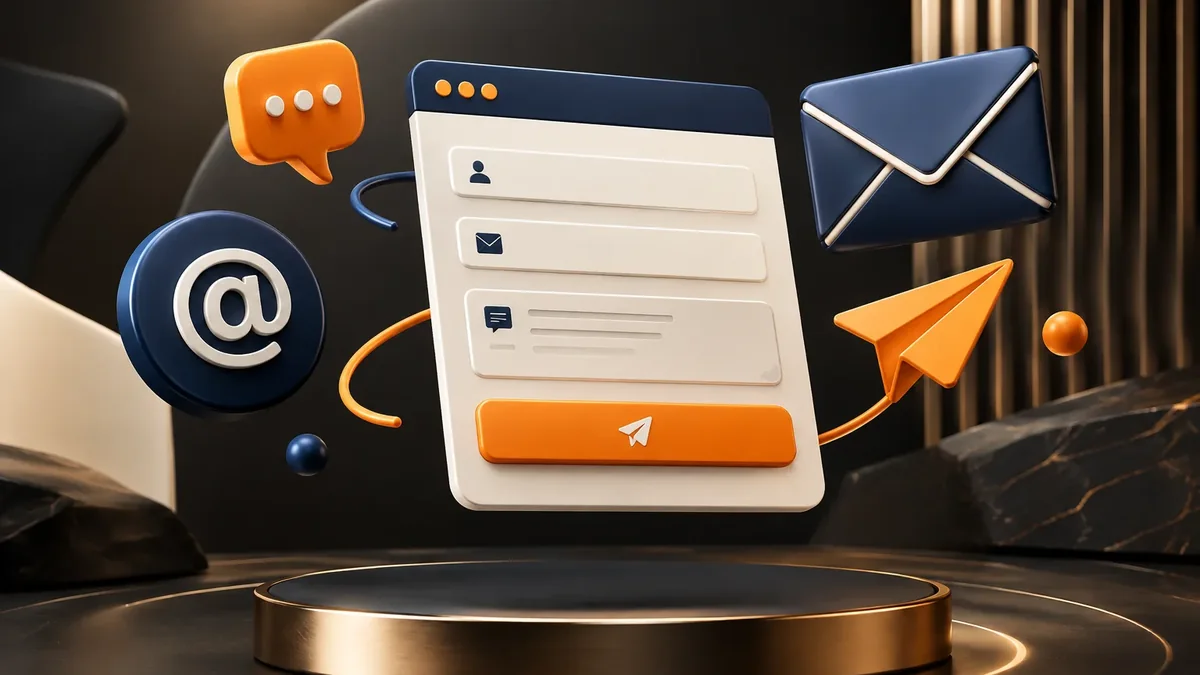
- Add a clear sign-up form to your website, with a consent checkbox and a link to your privacy policy.
- Offer something in return: a guide, a downloadable catalog, a welcome discount.
- Ask for consent during checkout in your online store, with a checkbox separate from the terms.
- Use your social media to invite people to subscribe, with a link to the sign-up page.
- At events and points of sale, collect consent in writing or through a digital form.
If you need help with the form, see how to build a good contact form.
What to send so people open your emails
Your customers’ inboxes are full. To stand out, every email has to earn the click.
- A specific subject line: it says what is inside and why it matters. No all caps or excessive exclamation points.
- One goal per email: read an article, see a promotion, or book an appointment. Not everything at once.
- Short, scannable copy: brief paragraphs, one descriptive image, and a visible button.
- Mobile-friendly design: most emails are opened on a phone.
- Value, not just sales: tips, useful news, case studies. If all you do is sell, people unsubscribe.
Protect your deliverability
Since 2024, Gmail and Yahoo have required bulk senders to authenticate their domain with SPF, DKIM, and DMARC and to offer one-click unsubscribe. Even if you send only a few emails, set them up: they improve your chances of reaching the primary inbox. Use a professional sending platform and a business email address on your own domain, never a free account.
Email and social media: better together
Email and social media do not compete. Each one does something the other cannot. Social media attracts new people; email converts and builds loyalty with those who already know you. A few ways to integrate them:
- Add your social media buttons to the footer of every email.
- Post a preview of your newsletter on social media with an invitation to subscribe.
- Use your customer list, with permission, to create custom audiences in Meta Ads and reach similar profiles.
- Turn the questions people ask you on social media into topics for your next emails.
- Invite your best customers by email to leave a review or share their experience on social media.
Automations worth setting up
Automations work for you around the clock. For a small business, these three usually deliver good results: a welcome email for new subscribers, an abandoned cart reminder for your online store, and a follow-up after a purchase or service. If you want to go further, marketing automation connects your email with your CRM and your website.
Segment your list
Sending the same email to everyone is the fastest way to bore your list. Split your contacts by what you know about them: customers and prospects, city, products they bought, or topics they care about. A wholesale distributor does not need the same information as an end buyer. With two or three well-planned segments, you will already see more clicks and fewer unsubscribes. Remember that any data you use for segmenting must also be covered by the consent the person gave you.
What to measure
Do not rely only on the open rate, which is unreliable today because of the privacy features in some email clients. Focus mainly on clicks, the sales or appointments that come from each send, unsubscribes, and spam complaints. If a campaign generates a lot of unsubscribes, review the content or the frequency.
With these basics, email becomes one of your most profitable channels. If you would rather we manage it with you, check out our email marketing service.
Want to start using email marketing in your company in an organized, legal way? Tell us about your situation and we will guide you.
Talk to an advisor